
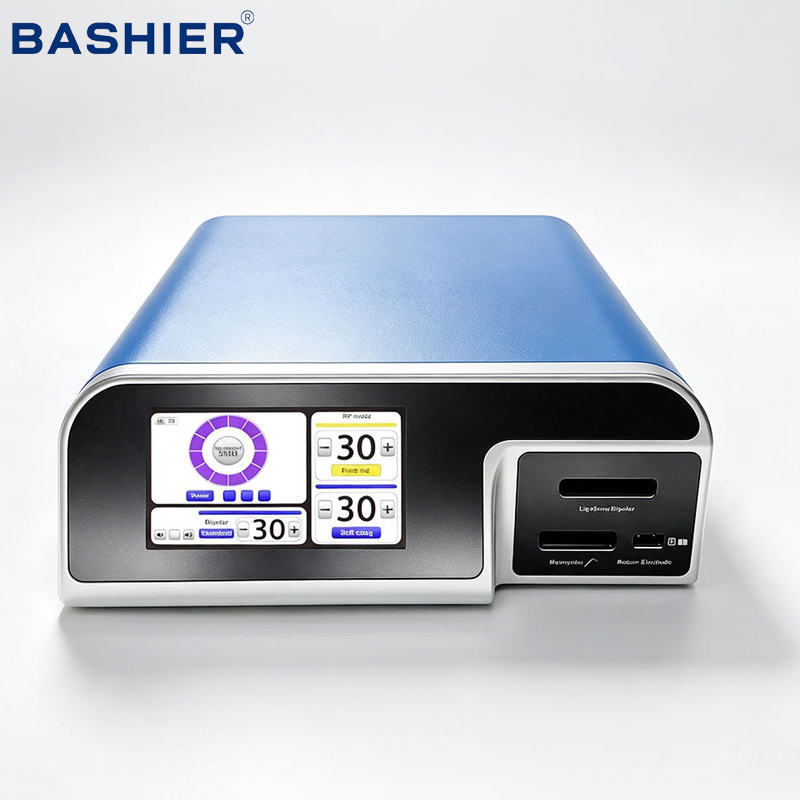
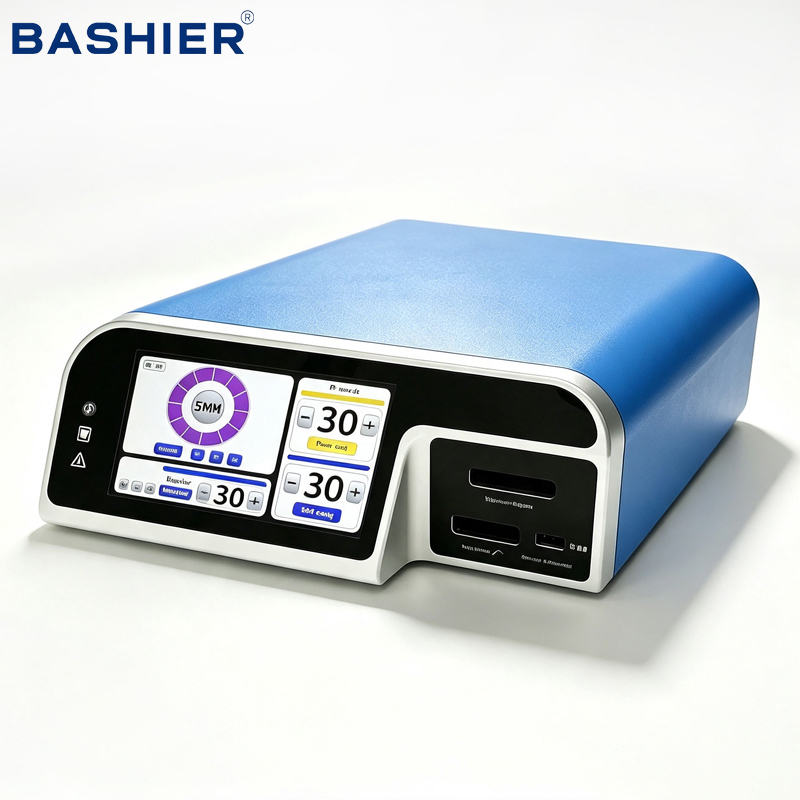
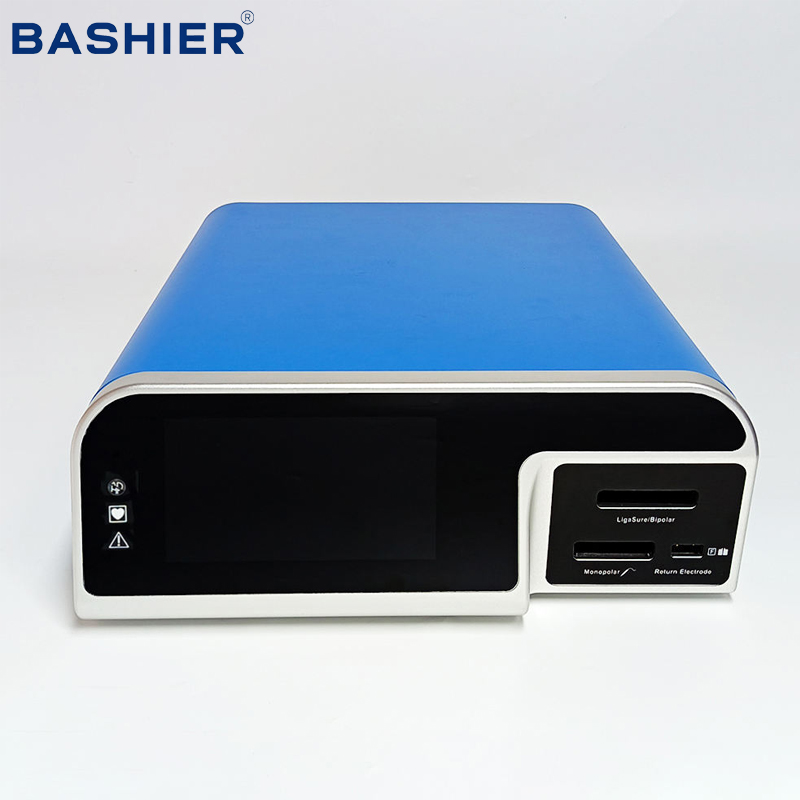
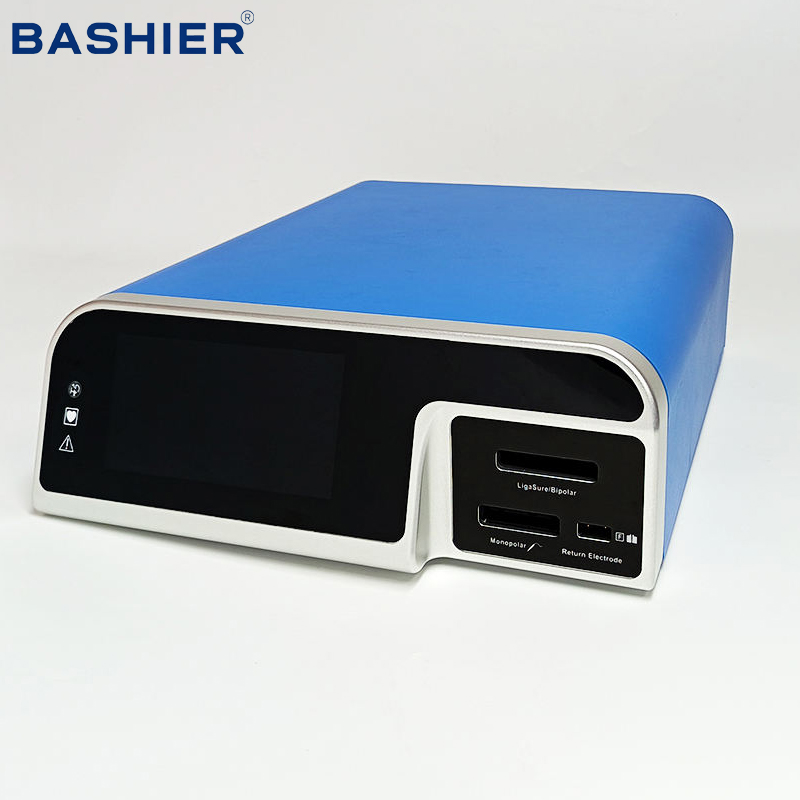
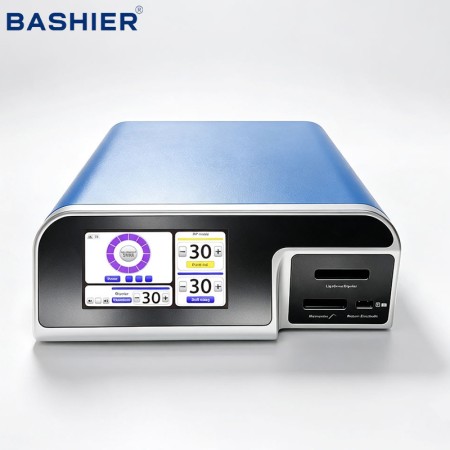
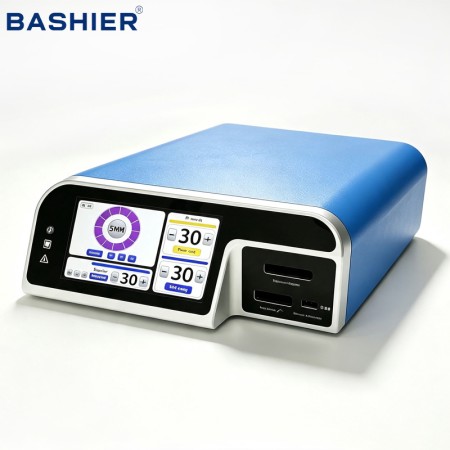
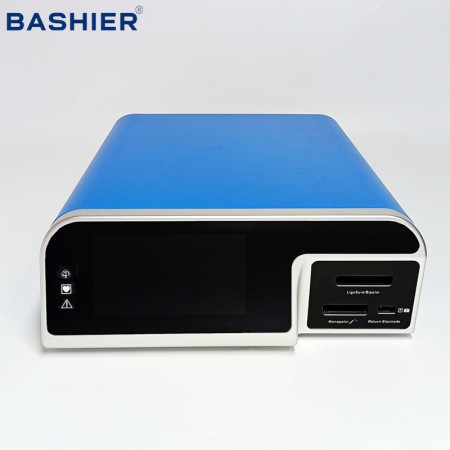
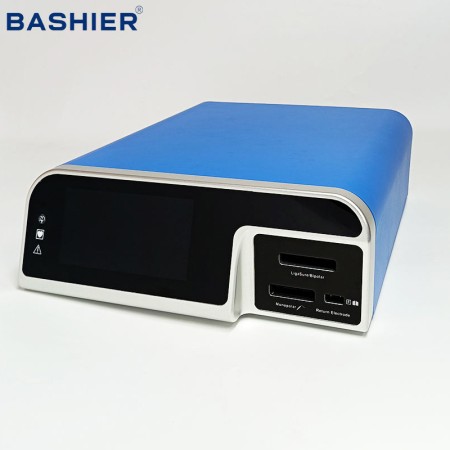
The LS11M Low-Temperature RF Energy Platform is a multi-function electrosurgical generator that combines vessel sealing, 4M radiofrequency cutting and coagulation, and bipolar coagulation in one unit. Operating at a 4.0 MHz radiofrequency, it divides and coagulates tissue at a lower working temperature than conventional high-frequency electrosurgical units, delivering fast haemostasis with limited lateral thermal spread — a meaningful advantage when working close to critical structures.
Traditional ESUs operate at 400–500 kHz. The LS11M works at 4.0 MHz, a frequency at which tissue impedance is lower and the cutting effect is stronger. This allows the generator to cut and coagulate quickly while keeping the temperature of surrounding tissue low, helping to reduce thermal injury and speed recovery.
Key benefit: Rapid tissue division with reliable simultaneous haemostasis and minimal collateral thermal damage.
1. Vessel Sealing
Seals vessels and tissue bundles up to 7 mm in diameter. The generator measures tissue impedance in real time, automatically controls the sealing cycle and signals completion visually and audibly — producing a permanent, repeatable seal without clips or ties.
2. 4M RF Cutting & Coagulation
Delivers controlled 4.0 MHz energy for both cutting and coagulation. Suitable for a wide range of tissue types and widely used in surgical fields where fast dissection and reliable haemostasis are required.
3. Bipolar Coagulation
Low-voltage, spark-resistant bipolar coagulation for delicate tissue desiccation. Reduces sticking and charring, with limited lateral thermal effect — well suited to fine laparoscopic, neurosurgical and other precision procedures.
Waveform | Type | Rated Power | Typical Use |
|---|---|---|---|
Pure Cut | Monopolar | 300 W | Fast, clean tissue division with minimal haemostasis |
Blend Cut | Monopolar | 200 W | Cutting with simultaneous coagulation |
Soft Coagulation | Monopolar | 120 W | Controlled desiccation, contact coagulation |
Spray Coagulation | Monopolar | 120 W | Non-contact coagulation of broad bleeding surfaces |
Bipolar Coagulation | Bipolar | 120 W | Precise coagulation, no patient return electrode required |
The colour LCD touchscreen gives the surgeon direct control over power level, working mode, audible volume and language. The interface supports Chinese / English switching and displays the selected waveform and output power at a glance, keeping operation straightforward even during complex procedures.
Interface controls: mode selection (monopolar / bipolar), power adjustment, volume adjustment, language switch, parameter display.
Isolated RF output with leakage-current control and self-check on start-up.
Automatic power regulation holds output at the set value under varying tissue loads.
Audible alert for vessel-sealing completion.
Compatible with a full range of monopolar and bipolar instruments.
Operating temperature +5 °C to +40 °C, humidity ≤ 80%.
General & Gastrointestinal Surgery — Gastrectomy, colectomy, splenectomy, thyroidectomy, axillary dissection.
Hepatobiliary & Pancreatic Surgery — Parenchymal transection and sealing of biliary and vascular structures.
Gynaecology — Hysterectomy, oophorectomy, myomectomy.
Urology — Prostatectomy, nephrectomy, cystectomy.
Precision Procedures — Laparoscopic, neurosurgical and other cases requiring limited thermal spread.


